
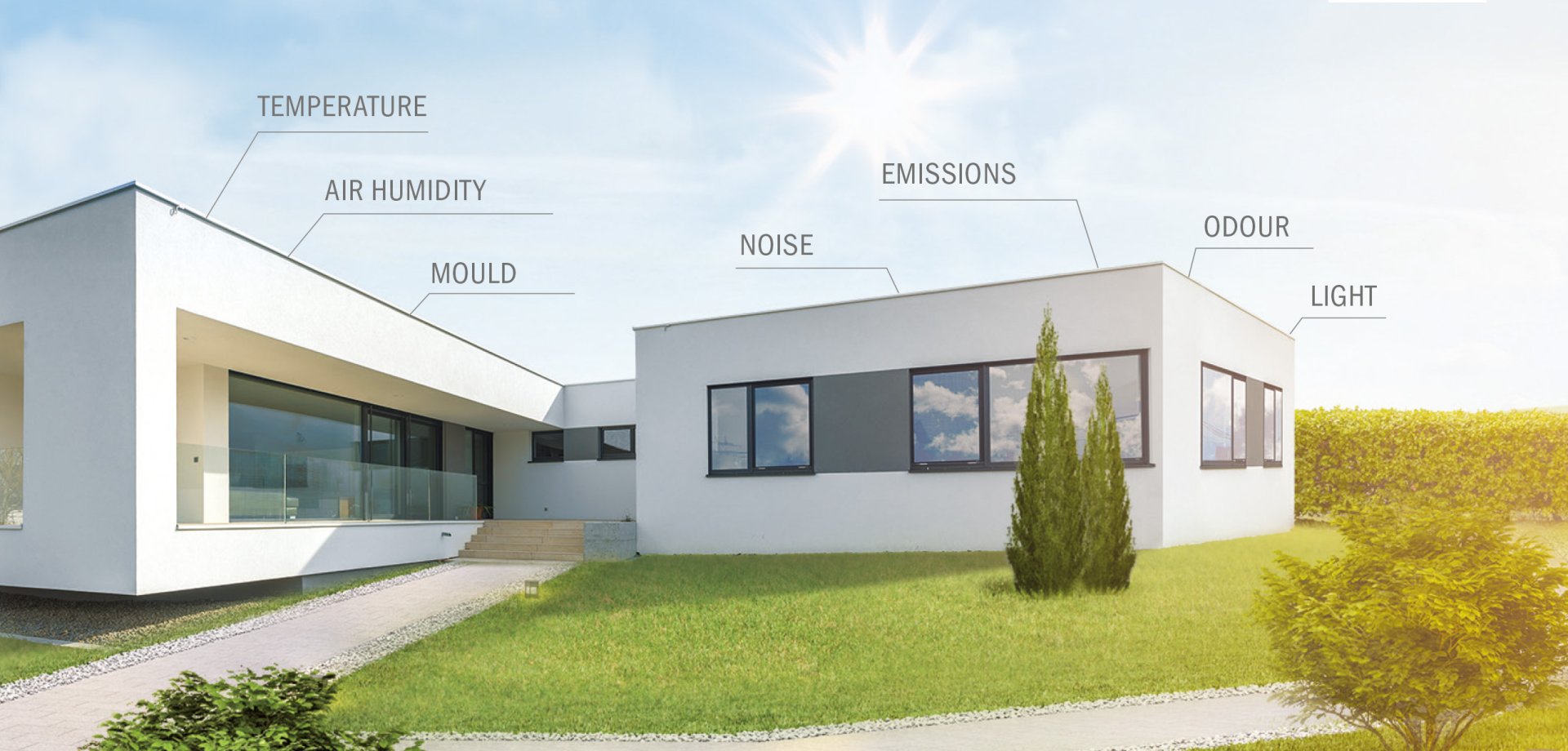
External wall insulation (EWI) can transform the performance and appearance of a building.
When correctly designed and installed, an external wall insulation system can improve thermal performance, reduce heat loss, increase internal comfort and renew the appearance and weather protection of an ageing façade.
However, achieving those benefits depends on much more than choosing the right insulation or render.
An EWI system is only as good as the combination of product, design, installation and technical evidence behind it.
Why quality matters in external wall insulation
Recent scrutiny of government-funded insulation and retrofit schemes has again demonstrated why quality assurance in external wall insulation needs to begin long before installation starts.
Quality cannot simply be inspected into a project afterwards.
The objective should be to get the design, specification and installation right first time.
That means looking beyond the final render surface and considering the complete external wall system and the building to which it is being applied.
EWI quality starts with the building
Before an external wall insulation system is specified, several fundamental questions need to be answered:
- What is the existing substrate?
- Is it structurally suitable, dry and stable?
- What wind loads must the system resist?
- What fire performance requirements apply?
- How will building movement be accommodated?
- How will windows, doors and openings be detailed?
- How will services and penetrations be treated?
- How does the system interface with rooflines, balconies and adjoining construction?
- Is the proposed EWI system actually certified and suitable for the intended application?
Only when these questions are understood can an appropriate system be designed and specified.
This is why external wall insulation should be considered as a complete façade system, rather than simply insulation boards and render applied to an existing wall.
External wall insulation requires a system approach
A typical EWI system consists of multiple components designed to work together.
Depending on the system and application, these can include:
Substrate → Adhesive → Insulation → Mechanical Fixings → Basecoat → Reinforcement Mesh → Primer → Decorative Finish
Additional components and details may also be required around openings, movement joints, fire barriers, rooflines, penetrations and other building interfaces.
The performance of the finished façade therefore depends on the interaction between these components, the supporting wall and the quality of the design and installation.
More than an EWI product manufacturer
Baumit has been developing façade, render and insulation technology over many decades.
The Baumit brand was established in 1988, bringing together established expertise in lime, cement, insulating renders and machine-applied plasters, while the wider industrial tradition behind the company extends for more than a century.
That experience has helped shape an approach focused not simply on individual products, but on how building materials perform together as part of complete systems.
Viva Research Park: understanding how buildings perform
In 2015, Baumit established the Viva Research Park in Wopfing, Austria, to investigate how different construction materials and building systems can influence indoor living conditions.
Rather than relying solely on conventional laboratory specimens, Baumit created a research village containing model houses constructed using different wall materials and build-ups.
The houses allow researchers to compare factors such as temperature and humidity under comparable external conditions.
The result is effectively a living building-material laboratory, providing an opportunity to study how materials perform as part of real building constructions rather than considering individual products in isolation.
This system-led approach to research reflects an important principle for external wall insulation: the performance of the complete construction matters.
Independently assessed external wall insulation systems
Research and product development ultimately need to translate into EWI systems that can be specified with appropriate technical evidence.
Baumit's current UK external wall insulation portfolio includes independently assessed systems for different supporting wall constructions.
Baumit StarSystem EPS
Baumit StarSystem EPS is independently assessed for defined masonry and concrete supporting wall applications within the scope of its current certification.
Baumit StarSystem Mineral – Direct Fix
Baumit StarSystem Mineral – Direct Fix is independently assessed for defined masonry and concrete supporting walls and externally sheathed light-gauge steel frame applications within its certified scope.
Baumit StarSystem Nature – Direct Fix
Baumit StarSystem Nature – Direct Fix is independently assessed for externally sheathed structural timber-frame supporting walls within its defined scope.
These systems demonstrate why certification needs to be understood in context.
They are not simply approvals for individual insulation products. Each Kiwa BDA Agrément defines a system with specified components, substrates, design considerations, installation requirements and performance characteristics.
This matters because EWI is not simply insulation plus render. It is a complete façade system.
Why EWI certification matters
Independent third-party certification provides important technical evidence about an external wall insulation system and its assessed scope.
However, certification should be the beginning of the technical conversation rather than the end.
Designers and contractors still need to understand:
- which substrate the system is assessed for
- which components form the certified system
- applicable system limitations
- fixing and installation requirements
- relevant performance characteristics
- project-specific design requirements
- A certification logo alone cannot demonstrate that a particular system is suitable for every building.
The proposed application must fall within the scope of the relevant certification and be supported by the necessary project-specific EWI design.
Competent EWI installation completes the system
Even a correctly specified and well-designed external wall insulation system can be compromised by poor workmanship.
Correct installation is therefore fundamental to achieving the intended performance of the façade.
Baumit's current Kiwa certification sets out installation requirements for its assessed systems, including requirements relating to the control of workmanship by competent personnel employed by Approved Installers.
More broadly, the direction of the UK external wall insulation and retrofit industry is towards clearer competence requirements, stronger quality assurance and better evidence of installation.
This reinforces the need to consider installation quality alongside products, certification and technical design.
From research to long-term EWI performance
Delivering high-quality external wall insulation requires a connected process:
Research → Product Development → Testing → Certification → Project-Specific Design → Competent Installation → Inspection → Warranty & Maintenance
Each stage contributes to the performance of the finished external wall.
A high-quality product cannot compensate for inappropriate specification.
Certification cannot compensate for a design that falls outside its assessed scope.
And good design cannot compensate for poor installation.
When product, design, installation and evidence work together, external wall insulation can deliver what it was designed to achieve: a warmer, more durable, energy-efficient and attractive building envelope.
For Baumit, that is the bigger picture.
Further reading: Baumit – Viva Research Park.